This week marks the culmination of another year of dance lessons for my 12-year-old daughter−and a year’s worth of chauffeuring her and her friends to and from lessons three evenings a week as they study the fine art of ballet, jazz, tap, modern and pointe. All week she and the other students in her dance school have spent many dedicated hours rehearsing for the annual recital.
It seems like just yesterday that my then four year old stood on the stage at the local high school for her first rehearsal. I watched as she reached behind and grabbed the bottom of her leotard to adjust it and make it more comfortable. I asked the teacher later if I should talk to my daughter about not making that adjustment on stage during the performances. The teacher smiled knowingly and replied, “No, don’t say anything, that’s a crowd pleaser.”
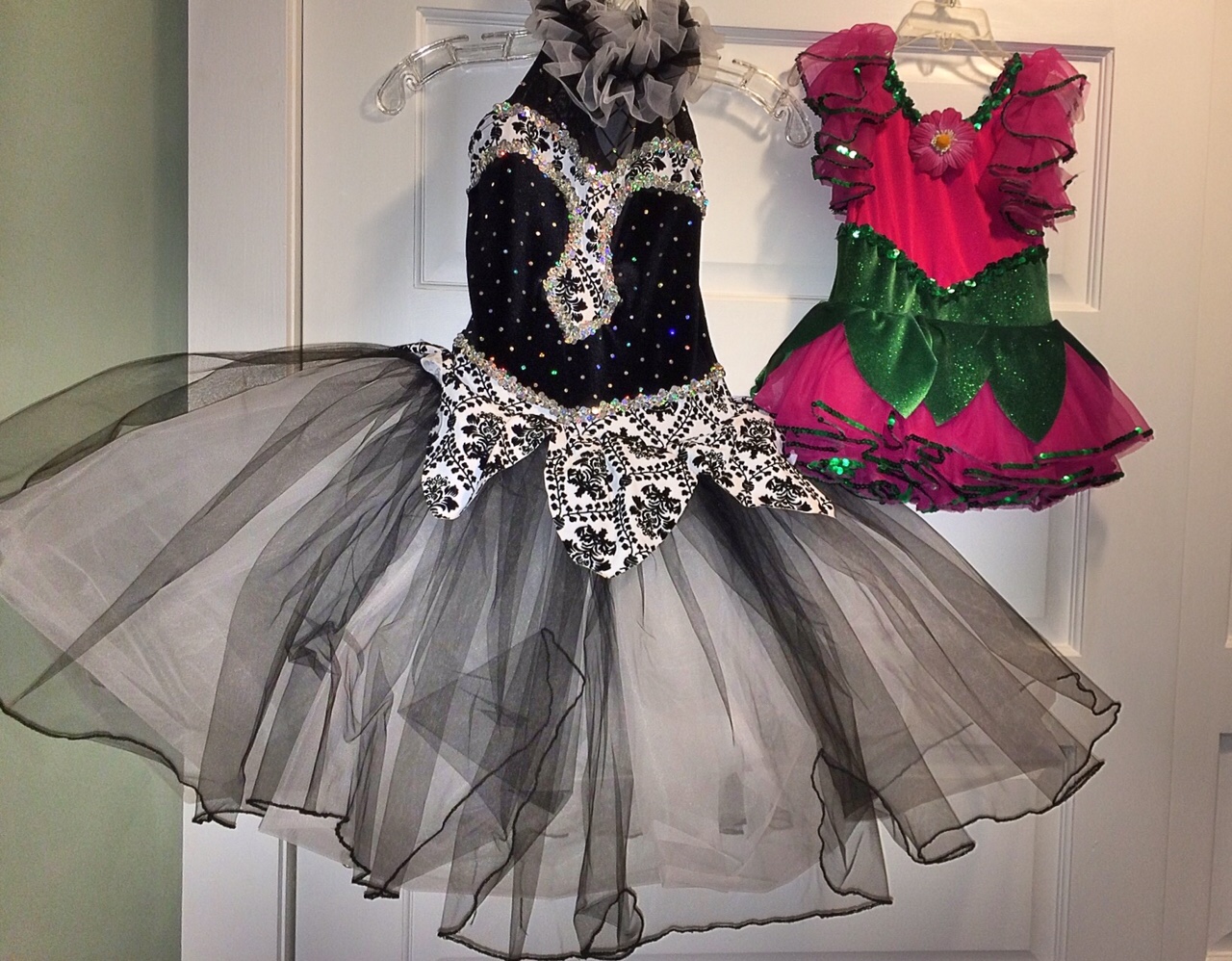
On the left is this year’s pre-pointe costume. On the right is the first ballet costume from nine years ago.
This week I sneaked a peek through a crack in the door as my daughter’s class rehearsed. They were moving so elegantly on the stage as they practiced their pre-pointe performance, standing tall and straight, taking precise steps as they raised up on the very tips of their toes. None of these girls would ever in a million years make that “crowd-pleasing” adjustment that my daughter made to her leotard when she was just four.
But here’s the thing about seeing your child take dance, or participate in any other activity that builds a particular skill, from the time she is a tiny tot. Each year during the recital you see huge change and progress. The girls in the class not only get taller and look more grown-up, they are also measurably better and more skilled as they master increasingly complicated dance steps and choreography. And seeing our once-little girls up there on stage leaves some of us ‘dance moms’ feeling a tad bittersweet as we realize our daughters are becoming teenagers.
 CeceliaMasonWV